
I've been working with Kambo for more than ten years, and there is something I feel very strongly about. Learning how to administer Kambo doesn't automatically make someone a responsible practitioner.
I've trained with different teachers, studied extensively, and worked with people from many different backgrounds. And the longer I do this work, the more aware I become of how much responsibility is involved. I've also seen how easily the conversation around practitioner training can become focused on certifications and techniques.
But what about the person sitting in front of you?
Do you understand their medical history? Can you recognize contraindications? Do you know when a situation is outside your experience?
And perhaps the most important question of all: are you willing to say no?
These are the questions I believe we need to be asking when we talk about becoming a Kambo practitioner.
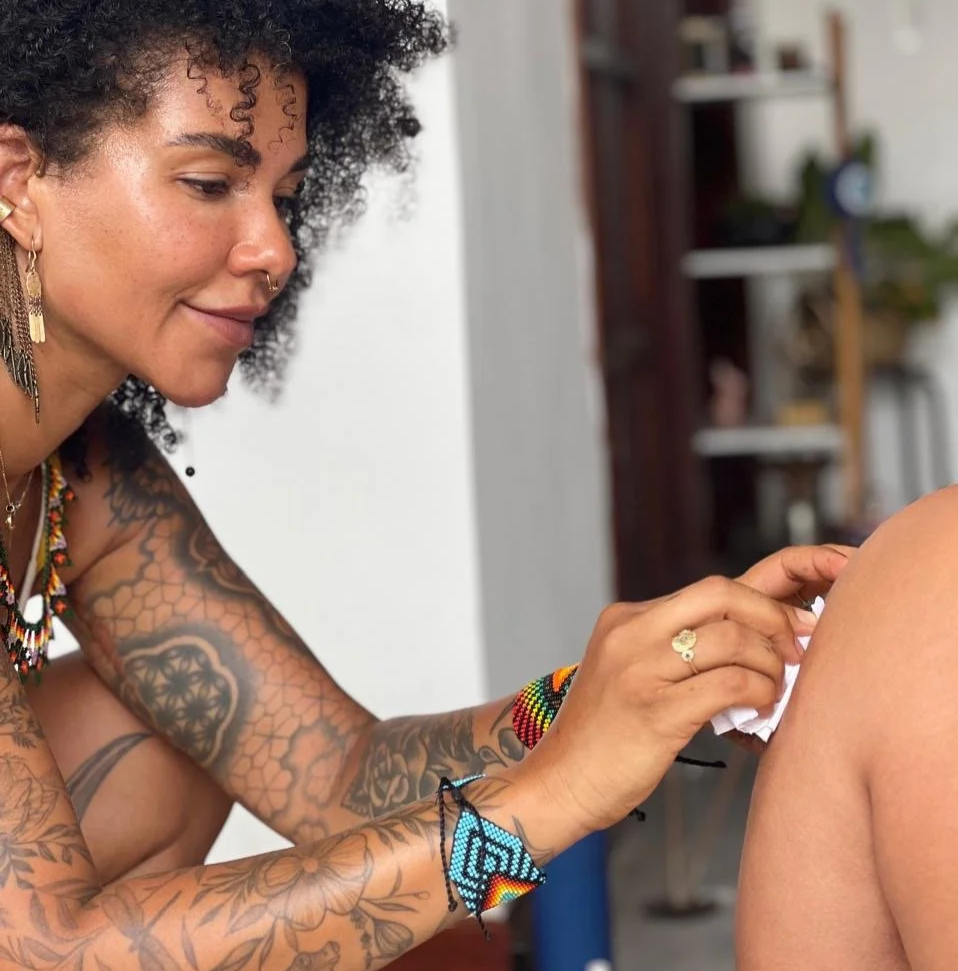
What Is a Kambo Practitioner?
A Kambo practitioner is someone who administers the secretion of the Phyllomedusa bicolor frog, a species native to the Amazon rainforest.
Kambo has a history of use within Indigenous traditions, particularly in parts of South America. Over time, its use has spread into other countries and contemporary ceremonial settings.
The secretion contains biologically active compounds that can produce powerful physical reactions, including vomiting, changes in heart rate and blood pressure, swelling, and other significant physiological effects.
Serious complications, including dangerous electrolyte imbalances, seizures, and deaths, have also been documented. Kambo is not an approved medical treatment, and its claimed therapeutic benefits have not been established through adequate clinical trials.
Anyone considering work in this field needs to understand these realities.
A practitioner may have learned the physical technique of administering Kambo, but that tells us very little about their education, their ability to recognize risk, or the decisions they make when a person is sitting in front of them.
And those decisions matter enormously.
What Does It Take to Become a Kambo Practitioner?
I sometimes see people approaching practitioner training with the idea that completing a course and receiving a certificate means they are ready to begin working with others.
I question that assumption.
I've been studying this work for more than a decade, and I still believe there is more to learn.
For me, practitioner education begins with developing a proper understanding of the substance, its effects on the body, its cultural context, and the risks involved in administering it.
It also involves recognizing the limits of your knowledge.
Can you identify situations in which Kambo should not be administered? Do you understand why health screening is necessary? Are you prepared to recognize a medical emergency and seek appropriate professional assistance?
What happens when someone presents with a situation outside your training or experience?
These are questions I believe every aspiring practitioner should be asking.
A responsible decision may mean declining to work with someone.
And I would much rather see a practitioner make that decision than feel pressured to proceed because someone has travelled a long distance, paid for a session, or arrived with certain expectations.
Safety, Ethics and Knowing Your Boundaries
Kambo can cause significant physiological reactions, and there are serious risks associated with its use.
This is why I place such importance on education around contraindications, medical screening, hydration-related risks, and emergency preparedness.
Understanding these subjects doesn't eliminate the risks. Private practitioner training cannot replace medical qualifications or emergency services.
Ethics matter just as much to me.
What information are we giving people before they consent? Are we being honest about what is known and what remains uncertain about Kambo? Are we making claims that cannot be supported?
And are we willing to acknowledge when someone requires a different kind of professional support?
I have always believed that practitioners need to be able to question themselves.
Confidence can be helpful. Certainty, especially when working with another person's health, can become dangerous.
Is Kambo Practitioner Certification Recognized?
This is an important question to ask before investing in any Kambo practitioner training.
At Awareness of Body & Soul Center, students who successfully complete the written and practical assessments receive a certificate issued by our training program.
This certificate documents completion of our educational requirements. It is not a government-issued professional licence.
Costa Rica does not have a specific professional licensing system for Kambo practitioners. However, that does not mean administering Kambo is automatically legally permitted or unrestricted. Anyone considering offering Kambo sessions needs to investigate the laws and regulations that apply where they intend to practise.
I believe it's important to be transparent about what a certificate represents.
My responsibility as an educator is to provide thorough training, assess students carefully, and encourage continued learning. A certificate alone cannot establish someone's readiness to work independently with others.
Why I Created My Kambo Practitioner Training
For years, I worked with this medicine, continued my own education, and thought about what I wanted to pass on to others.
I wanted to develop a program that reflected the standards I believe are necessary in this work.
That meant creating space for education, discussion, observation, and supervised learning.
Our Kambo Practitioner Training in Costa Rica includes theoretical study, examination of the physiological effects and risks of Kambo, screening and contraindications, ethical considerations, somatic awareness, and supervised practical experience.
Students complete written and practical assessments, and previous personal experience with Kambo is required before applying.
The program takes place over ten days, with online preparation beginning before students arrive.
We also require basic First Aid certification as part of the application requirements. This is an educational prerequisite and does not replace medical training or emergency care.
I believe ongoing learning matters. Our graduates are invited to remain connected through a practitioner community where they can continue conversations and share experiences.
Ten days of training cannot replace years of experience. I want students to understand that from the beginning.
My hope is that people leave with a much clearer understanding of their responsibilities, along with a realistic awareness of what they still need to learn.
How Do You Know Whether This Work Is Right for You?
If you've experienced Kambo yourself and are considering training as a practitioner, I encourage you to spend some time with that question.
What is drawing you toward this work?
What experience do you already have?
Are you prepared to study subjects that may challenge your existing beliefs about the medicine?
Are you willing to accept feedback, acknowledge mistakes, and recognize situations in which you should not administer Kambo?
For our training, previous experience with Kambo is mandatory. We also require basic First Aid certification and have an application process to assess whether the program is an appropriate fit.
I want people to enter this work with their eyes open.
There is responsibility involved, and that responsibility continues well beyond the training itself.
Curious About Kambo Practitioner Training? Come Meet Me.
Our next Kambo Practitioner Training takes place February 6–15, 2027, in Nosara, Costa Rica.
If you're considering joining us and have questions about the curriculum, prerequisites, or my approach to teaching, I'd love to invite you to a free online information and Q&A session at the end of November.
This will be an opportunity to meet me, hear more about the program, and ask whatever questions are on your mind.
There is no obligation to apply.
I believe choosing a teacher is a personal decision. You deserve the opportunity to understand who you'll be learning from and how they approach their work.
[Register for the free Kambo Training Q&A — date and link to be added]
You can also explore the full Kambo Practitioner Training in Costa Rica, including the curriculum, prerequisites, and application process.
With love from Costa Rica,
Natalie